How Many Video Testimonials Do You Need?
Wondering how many video testimonials do you need? Get clear, practical numbers by price, offer type, and channel so you stop guessing and convert more.
If you’re like most ambitious owners in healthcare, finance, or real estate, you’ve heard some version of this stat: 64% of viewers say they are more likely to purchase a product after watching a video testimonial.
That’s huge… but it immediately raises a headache of a question: “So how many video testimonials do I need?” Five? Fifty? A whole library? Add in the fact that you’re already busy seeing patients, running reviews, or showing homes, and you don’t have time (or budget) to guess.
Let’s unpack the honest answer, from trust, conversions, and SEO, to where one 90‑second story can do more work than a wall of 20 forgettable clips, and I’ll give you practical, simple guidelines you can use this week.
Key Takeaways
- The real answer to how many video testimonials you need depends less on volume and more on covering key objections, buyer personas, and desired outcomes with a handful of strong stories.
- For most service businesses, a powerful starting point is 3–7 short, specific video testimonials on core landing or sales pages, strategically placed near pricing, calls-to-action, and FAQs.
- Higher-priced, high-risk, or enterprise offers need more proof, typically building toward 8–30+ testimonials over time to cover different roles, locations, and concerns across a longer sales cycle.
- Three sharp, specific, emotionally resonant testimonials will consistently outperform a wall of 20–60 vague, generic clips that all sound the same and create skepticism or decision fatigue.
- You should only scale the number of video testimonials when your market, offer, or ideal customer profile changes, using a simple gap analysis to decide which stories to record next for maximum impact.
Why This Question Matters More Than You Think
You’re not asking, “How many videos do I need?”
You’re asking, “How much proof does someone need before they feel safe saying yes to me?”
That’s a very different game.
A lot of businesses obsess over the quantity of testimonials like it’s a scoreboard. More logos, more faces, more clips, surely that means more trust, right? In reality, effectiveness does not scale in a straight line with volume.
Each video testimonial is a high-impact, high-friction asset.
It takes coordination with a happy client, some planning, and at least a bit of editing time. You feel every minute of it. So if you’re going to invest that effort, you want those few videos to pull real weight, to close the gap between “I’m not sure” and “Where do I sign?”
On top of that, short customer stories do triple duty for you:
- They calm people’s fears (trust).
- They boost conversions (more leads and bookings).
- They keep visitors on your site longer, which helps your SEO.
So the question isn’t “How many can I crank out?” It’s “What’s the minimum number of great videos do I need to reliably turn strangers into believers?”

Why “More Testimonials” Isn’t Always Better
You’ve probably landed on a site with 40+ testimonials stacked like a CVS receipt.
Did you read them all? Not.
Diminishing Trust Returns
Social proof behaves a lot like medicine; up to a point, it helps, but beyond that, you just get side effects.
Three to five specific, believable stories can make a prospect think, “Okay, people like me are getting results.”
When you shove 25 generic “They’re amazing…” clips onto a page, the effect flips. People start to wonder:
- “Are these cherry-picked?”
- “Did they pay for these reviews?”
- “Why do they all sound the same?”
Too much, especially when it all feels polished and perfect, can trigger skepticism instead of confidence.
Cognitive Friction
There’s also a brain bandwidth problem.
Decision-making burns energy. When you offer visitors a buffet of 15 videos, you’re saying, “You figure out what matters.” That’s how you get decision fatigue and people bouncing.
A handful of sharply chosen clips, each under about 2 minutes, front-loaded with the best soundbite, guides the brain instead of overwhelming it.
Your goal is clarity, not content shock.
So more is not automatically better. The right ones, in the right places, are better.
The Variables That Decide Testimonial Quantity
Here’s the honest answer nobody likes: the “right” number depends.
But it doesn’t depend on vibes: it depends on a few clear variables. Once you know these, you can stop guessing.
Offer Price Point
Think about risk from your buyer’s point of view.
- Low-ticket offers (a $49 digital product, a $99 consultation): people don’t need 15 stories. 2–3 strong clips that say, “This worked, it was easy, and it was worth it,” often cover it.
- High-ticket offers (a $7,500 wealth plan, a $10,000 treatment plan, a $25,000 coaching engagement): now they’re asking, “Will this really work for someone like me?” You need more coverage, different niches, scenarios, and outcomes.
Higher price = higher proof threshold.
Sales Cycle Length
Short sales cycles are impulse-ish.
Someone lands on your page, decides within 10–20 minutes, and either schedules a call or leaves. In that world, 3–5 targeted videos can be plenty.
Longer, consultative sales (common in healthcare procedures, complex financial planning, or commercial real estate) have more steps: research, comparison, and internal approvals. Testimonials show up at multiple stages, on your site, in follow-up emails, and in proposals, so you’ll want a deeper bench of stories.
Traffic Source
Where people come from also affects how much proof they need.
- Cold paid ads → people don’t know you. 1–3 super short clips focused on “I was skeptical, then this changed everything” work best.
- Organic search → They’re actively researching: give them 3–7 videos spread through your page.
- Referrals or warm email → they already trust you a bit: 1–3 well-placed stories are usually enough.
Buyer Sophistication
Are they brand-new to this kind of service, or have they seen dozens of options?
First-time buyers (new homebuyers, first-time investors, newly diagnosed patients) need simple, reassuring stories: “I was nervous. Here’s what happened.”
More experienced or jaded buyers look for nuance, case studies with numbers, specific timelines, and outcomes. The more sophisticated they are, the more angles you’ll want to cover. Not necessarily more videos, but more variety in those videos.
Recommended Testimonial Counts by Use Case
Let’s get concrete. Here’s where most service businesses land.
Landing Pages
This is often your money page: “Book a call,” “Schedule a consult,” “Apply now.”
Sweet spot: 3–7 video testimonials.
- 1–2 near the top to instantly reduce anxiety.
- 2–3 near pricing or the call-to-action.
- Maybe one by the FAQ section tackling a common fear.
Keep most of them under 2 minutes, ideally 60–90 seconds, and make sure each one hits a different angle: a different persona, objection, or outcome.
Sales Pages
If you have a longer page that does heavy lifting, explaining method, bonuses, FAQs, you can support it with 5–15 videos.
You’re not expecting people to watch all of them. You’re giving them options:
- One that speaks to cost.
- One that speaks to results.
- One that speaks to “Is this complicated or scary?”
Think of these like “live footnotes” backing up your claims.
Retargeting Ads
Here, you want 1–3 short clips in rotation.
Someone visited your site, didn’t convert, and now they’re doom-scrolling on their phone. Hit them with 15–45 seconds of a real human saying something like, “I kept putting this off, and I’m so glad I finally booked the call.”
Frequency matters more than volume here; you can squeeze a lot out of just a few strong videos by cutting them into different hooks.
Enterprise Sales
Selling into a hospital system, a large brokerage, or a multi-office financial firm? Now there’s a buying committee, not just one person.
You’ll want a library, maybe 10–30 testimonials over time, covering:
- Different roles (CFO, medical director, broker-owner).
- Different locations or segments.
- Different concerns (compliance, implementation, staff adoption, ROI).
High-Ticket vs Low-Ticket Offers
A simple way to think about it:
Offer TypeTypical Price RangeSolid Starting Count
Low-ticket / IntroUnder $2002–3 videos
Core service$500–$5,0003–7 videos
High-ticket / Premium$5,000–$25,000+8–15 videos
Enterprise / Multi-site$25,000+ and committees15–30+ over time
You can absolutely start smaller. The point is: as risk climbs, you add more proof, not more fluff.
Want to know the most effective places to put video testimonials in? Find out in our Where to Use Video Testimonials guide.
The “Coverage Model” (What Testimonials Must Cover)
Here’s the mindset shift: don’t count videos, cover gaps.
Imagine you’re laying tiles. You don’t ask, “How many tiles look impressive?” You ask, “What area do I need to cover so there’s no ugly empty patch?”
Your testimonial “tiles” should cover four key zones.
Objections
What are the top 3–5 reasons someone doesn’t move forward with you?
- “It’s too expensive.”
- “I’m scared it won’t work for my specific situation.”
- “I don’t have time.”
- “I’ve been burned before.”
You want at least one video per primary objection. The best ones sound almost uncomfortably honest, “I thought the price was high at first…”, and then show the other side.
Personas
You’re not selling to “everyone.” You’re selling to specific people.
A pediatric dentist in Austin needs parents. A financial advisor might serve tech employees, physicians, or small-business owners. A brokerage might focus on first-time buyers.
You want real clients who look and sound like your ideal future clients.
If three different personas matter to your business, you want at least one video for each. One size does not fit all.
Outcomes
People don’t buy processes: they buy pictures of their after.
So mix:
- Tangible outcomes: savings, increased revenue, number of new patients, time saved.
- Emotional outcomes: relief, confidence, clarity, peace of mind.
Have some videos that talk numbers, “We increased monthly leads by 35%”, and some that quietly punch the heart: “I finally slept through the night.”
Emotional States
Your buyers move through a mini emotional rollercoaster: fear → curiosity → hope → relief.
Great testimonials match those states:
- Fear: “I was terrified I’d make the wrong move.”
- Curiosity: “I wanted to understand how this worked.”
- Hope: “I started to think, maybe this could work for me.”
- Relief: “I wish I’d done this a year earlier.”
When your testimonial library echoes what’s already in their head, it feels less like marketing and more like reassurance.
Know which type of testimonial to use for each use case. Dive into our Video Testimonial Types guide.
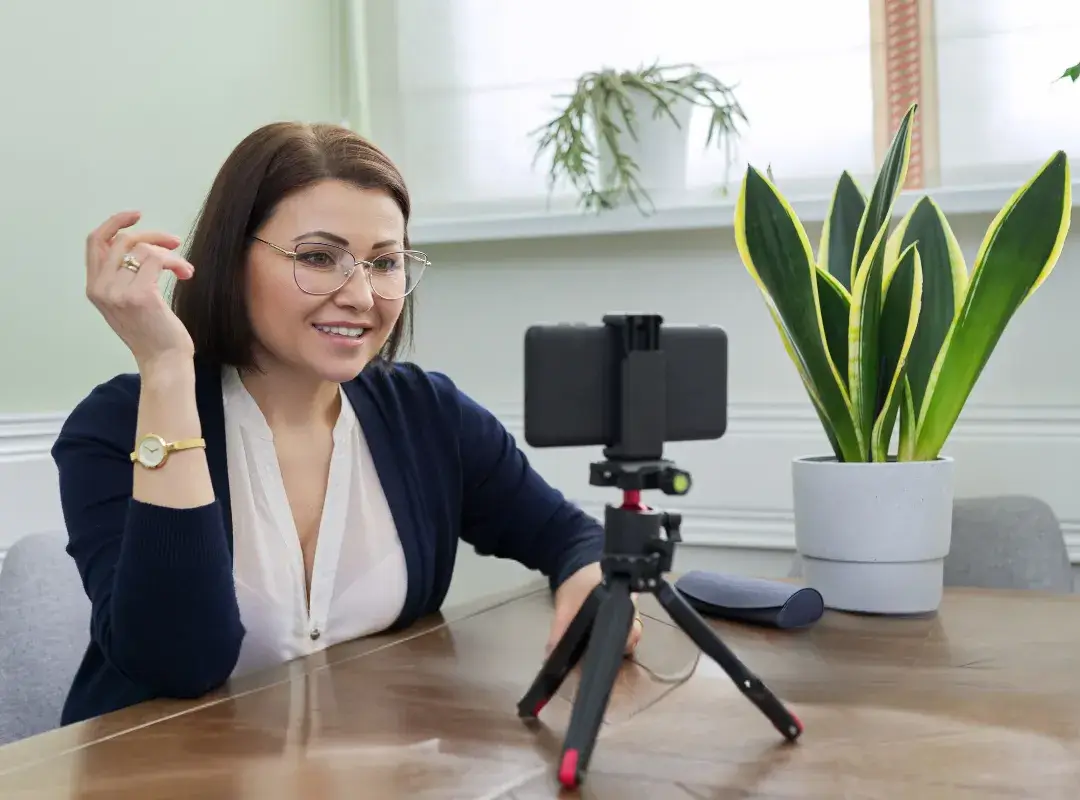
Why 3 Strong Testimonials Beat 20 Weak Ones
I once worked with a financial planner who proudly told me, “We have over 60 testimonials on our site.”
I clicked through… and every single one read like it was written by the same copy-paste robot. No specifics. No numbers. Just, “Great service, highly recommend.”
They weren’t helping. They were wallpaper.
Specificity Advantage
Three sharp, specific stories will beat 20 vague compliments every day of the week.
Specific looks like:
- “We were drowning in medical billing errors, and within 90 days our write-offs dropped by 40%.”
- “We closed on our first home in 32 days, even with my weird freelance income.”
Notice the details, timeframes, situations, and outcomes. Specifics scream “This happened.”
Recall vs Volume
There’s also a memory thing going on.
Your prospect is not going to remember 12 different stories. Their brain will hang onto one or two vivid ones: the nervous patient who finally got relief, the couple who thought they’d never qualify, the business owner whose cash flow turned around.
So instead of chasing volume, ask:
“If a prospect remembered just one story about us, which story would I want it to be?”
Then record that one, really well.
Once you have three of those, you’ve got more conversion power than a page full of generic praise.
When You Need to Scale Testimonial Volume
There are moments when you should lean into quantity, but it’s strategic, not ego-driven.
Market Expansion
If you’re moving from, say, local to multi-state, or from residential to commercial, your existing proof may feel “too small” for new buyers.
That’s when you start stacking more videos that show success in new cities, new property types, or new practice areas. Not because you love filming, but because your prospects are silently asking, “Has this worked over here?”
New ICPs
Maybe you’ve mostly worked with retirees, and now you’re targeting tech employees or medical professionals.
New ideal customer profile = new proof required. You don’t need 10 instantly: 2–3 on-point stories in that new lane give you enough traction to start.
New Objections
Price increases, offer restructures, and new regulations all create new doubts.
If you’re hearing a fresh objection on sales calls (“Is this still worth it at the new price?”), That’s your cue to record a new testimonial that tackles that head-on.
In short: scale volume when something about your market, message, or money has changed, and you need your stories to keep up.
How to Decide What to Record Next
If you’re thinking, “Okay, so where do I even start?” here’s a simple system.
Gap Analysis Method
Step back and look at what you already have.
- Do your existing videos all feature the same type of client?
- Do they all rave about your personality but never mention results?
- Do they miss objections you hear every week?
Make a quick grid with columns like Persona, Objection, Outcome, Emotion, and list which videos cover what. Anywhere you see blanks? Those are your gaps.
For example, a real estate team I know realized all of their videos were from first-time buyers. Zero from investors, zero from sellers. That explained why those groups always had more questions.
Prioritization Matrix
Once you see the gaps, you prioritize.
Ask two questions:
- Impact – If I had a testimonial that solved this objection or spoke to this persona, how much easier would sales become?
- Effort – How easy is it to get someone on camera for this?
High impact + low effort = record next week.
That might be the retired couple who emails you every holiday to say thanks, or the physician who already sends you referrals. Start with the folks who love you and whose stories plug your biggest leaks.
This is exactly the kind of planning a team like Share One handles with clients; they map out your proof gaps, then capture the real humans who fill them.
Create Video Testimonials with Share One
If you’ve skimmed everything, here’s the short version:
You don’t need more video testimonials; you need the right few, in the right places, saying the right things.
For most service businesses, that means starting with 3–7 short, specific stories that cover your key personas and objections, then expanding only when your market or offer shifts. Done well, those videos boost conversions, deepen trust, and quietly help your SEO every single day.
The catch? You’re busy running the business.
That’s where Share One comes in. Our video testimonial service specializes in human-first video storytelling, inviting your happiest clients, guiding natural (not awkwardly scripted) conversations, and turning those into tight, under-2-minute clips you can drop onto landing pages, emails, and ads**–all done-for-you**.
If you’re ready to stop guessing and start using customer stories as a real growth asset, take a peek at our solutions and begin building the three strongest testimonials your future clients will never forget.
Start with Share One ➡️
Frequently Asked Questions
How many video testimonials do you need for a typical service-based business?
Most service businesses don’t need a huge library. A strong starting point is 3–7 short, specific video testimonials. That’s usually enough to cover your key personas and objections, support your landing or sales pages, and significantly boost trust and conversions without overwhelming visitors.
How many video testimonials should be on a landing page vs a full sales page?
On a landing page, aim for 3–7 video testimonials: 1–2 near the top, 2–3 around pricing or the CTA, and possibly 1 near the FAQ. Longer sales pages can support 5–15 videos, giving prospects options that address cost, results, and fears at different points.
How should price affect how many video testimonials you need?
The higher the price and perceived risk, the more proof you need. Low-ticket offers under $200 can work with 2–3 videos. Core services at $500–$5,000 often need 3–7. High-ticket offers above $5,000 typically benefit from 8–15 well-chosen, varied testimonials over time.
What’s the best length for a high-converting video testimonial?
For most websites and funnels, keep video testimonials under two minutes, with a sweet spot of 60–90 seconds. Front-load the strongest soundbite in the first 5–10 seconds, focus on one clear story or objection, and avoid rambling so viewers stay engaged and actually finish the clip.
How often should I update or add new video testimonials?
Review your testimonial library at least twice a year. Add or refresh videos when your prices change, you launch new offers, target a new audience, enter new markets, or notice new objections on sales calls. Update any clips that feel outdated, off-brand, or no longer match your positioning.