Do You Need Professional Video Testimonial Production?
Learn when DIY is enough and when professional video testimonial production drives trust, conversions, and ROI with clear costs, examples, and steps.
If you knew that swapping a wall of text reviews for a few short video testimonials could boost your conversions, how fast would you hit “record”? According to recent video marketing studies, 73% of consumers say watching a testimonial video makes them more confident in purchasing decisions. The catch is you’re already juggling patients, closings, or client portfolios, so you need a testimonial strategy that builds serious trust, boosts your SEO, and doesn’t eat your entire week, this guide shows you exactly when to DIY, when to call in professional video testimonial production, and how a service like Share One can take the heavy lifting off your plate.
Key Takeaways
- Professional video testimonial production consistently delivers better audio, lighting, and editing than DIY, which directly increases viewer trust and conversion rates.
- DIY testimonials are ideal for early-stage validation and scrappy testing, as long as you keep videos under two minutes and prioritize clear sound and simple, honest stories.
- High-ticket and high-trust industries like healthcare, finance, law, and real estate benefit most from professional video testimonial production on core pages such as home, services, pricing, and ads.
- Pros add value beyond gear by handling strategy, client invitations, interviewing, filming, and post-production, turning long conversations into tight, on-brand testimonial stories for multiple channels.
- Hybrid models like remote capture with pro editing or batching several testimonials in one shoot are a cost-effective path to premium results and strong ROI from just a few extra closed clients.
DIY vs Professional, Honest Comparison
You’ve got happy clients. You know their stories would sell circles around anything you write. The question is: do you grab your phone and DIY… or bring in a pro crew?
Let’s strip the fluff and look at what changes when you move from “we shot this between appointments” to professionally produced stories.
At-a-glance comparison table (must include measurable dimensions)
Here’s the 30-second snapshot.
DimensionDIY (you + phone)Professional production
Audio clarityBuilt-in phone mic, background noise, and echoLav/shotgun mics, treated sound, clear voices
LightingWindow light, mixed color temps, changing sunControlled 3-point lighting, consistent skin tones
Interview coachingYou wing it between meetingsTrained interviewer, structured prompts, on-the-fly coaching
Editing polishBasic cuts, maybe a logoStory arc, B-roll, color grade, captions, branded graphics
Legal & release riskGoogle template, hope it’s fineProper release forms and consent baked into the process
Time to publish3–10 hours of your time per videoYou spend ~1 hour: team handles the rest
ScalabilityHard to repeat when life gets busyRepeatable system: batch 5–10 stories in one go
Typical cost$0–$500 cash, plus your time~$1,500–$5,000 per batch, depending on scope
None of this means DIY is “bad.” It just means you should be honest about what you’re buying: speed and savings vs consistency and impact.
When DIY makes sense
There are plenty of situations where grabbing your phone is exactly the right move.
You’re validating a new offer? Ask two or three early clients to record quick clips on their own phones. Keep them under 2 minutes, ask what life was like before you, what changed, and what they’d tell a friend.
You’re in a scrappy season with limited cash but strong relationships? Great. You can:
- Record Zoom calls with clients (with permission) and trim out 30–90 second gold nuggets.
- Prop your phone on a window ledge, plug in a $30 lapel mic, and chat with a client after an appointment.
Is it perfect? No. Is it real and usable on socials, email, and maybe a landing page? Absolutely.
The big win with DIY: you’ll start. And starting beats waiting six months for a “proper shoot” you never book.
When professional is the smart choice
Now flip the script.
Picture someone considering a $9,000 Invisalign treatment, a $750,000 home, or handing you their entire retirement portfolio. They land on your site. They watch a shaky vertical video with muffled audio… or they see a calm, well-lit patient or client speaking, with tasteful text on screen and tight editing.
Which version makes you look like you should be trusted with that level of risk?
Professional production is usually the smart call when:
- The video will live on high-stakes pages: home, service pages, pricing, or paid ads.
- You’re in trust-sensitive industries like healthcare, finance, law, or high-end real estate.
- You want a repeatable library of stories you can use for years, not just a one-off post.
This is where a human-first team like Share One shines: they handle invites, interviews, filming (often remotely), editing, and delivery, so your only job is saying, “These are our favorite clients, go talk to them.”
What DIY Fails to Capture
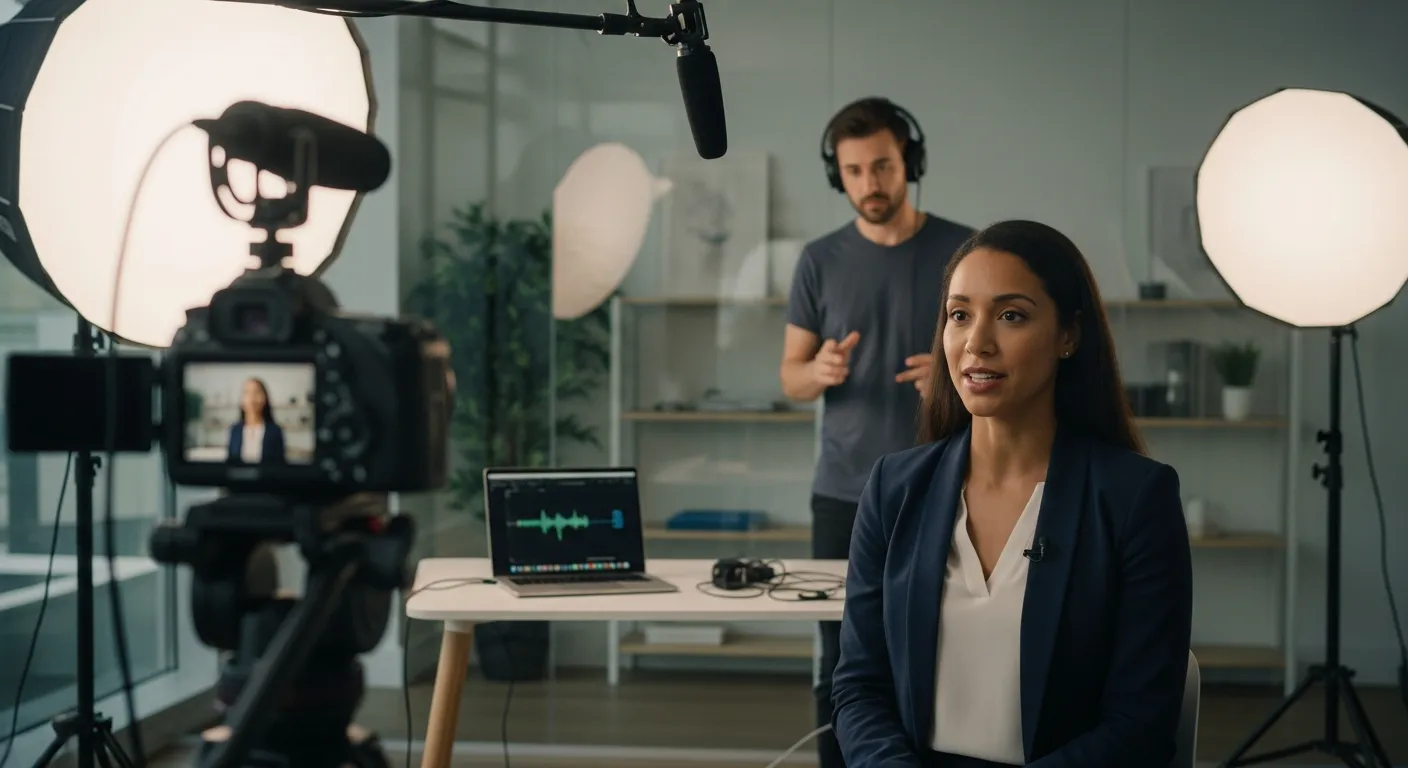
Let’s be real, you can absolutely film a decent testimonial on an iPhone.
Where DIY usually falls isn’t “can the camera record?” It’s everything that shapes whether a stranger watching it believes you.
Most self-shot testimonials miss three big things: clean sound, a clear story, and emotional confidence.
You’ve probably seen the classic DIY setup: client in a spinning office chair, overhead fluorescent lights, AC humming, laptop camera pointing up their nose. They talk for 8 minutes, never mention a concrete result, and end with, “Yeah… so… they were great.”
That video doesn’t hurt because it’s casual. It hurts because it’s fuzzy, no sharp visuals, no sharp narrative.
Production quality: specs that matter
A few boring-sounding details quietly scream “professional” to your audience:
- Audio first. If viewers struggle to hear, they stop trusting. An external mic close to the mouth, in a quiet space, changes the entire feel.
- Stable framing. Eye level, no weird up-the-nose angles, a bit of headroom, and a clean (or intentionally styled) background.
- Soft light. Face toward a big window or use a soft key light. Avoid harsh overheads that cast raccoon-eye shadows.
- Length. Research suggests the sweet spot is 2 minutes or less. Enough to tell a story, not enough to lose a busy buyer.
DIY setups often get one or two of these right by accident: pros lock in all of them on purpose.
Editing aesthetics & narrative assembly
Here’s the secret sauce: the magic isn’t just what the client says, it’s what you keep.
Pros cut rambling intros, tighten pauses, and structure the story like this:
Before: the pain or fear.
After: the results in concrete terms.
Why you: what felt different about working with you?
They weave in B-roll: the client walking into your clinic, signing closing documents, checking a portfolio dashboard, laughing with your team. Suddenly, it feels like a mini-documentary, not a hostage video.
DIY edits often stop at “we trimmed the awkward hello.” Pros are thinking, “Where does your future client lean in and think, that sounds like me?”
Interviewer skill & coaching
This might be the biggest invisible gap.
Most of your clients aren’t camera people. You ask, “Can you record a quick video about working with us?” and they freeze. They rehearse, stare at themselves, sound stiff, and you both feel awkward.
A good interviewer does something different. They:
- Warm the guest up in casual conversation.
- Ask open questions like “What was going through your mind when…?” instead of “Did you like us?”
- Gently nudge for specifics: timelines, dollar amounts, before/after contrasts.
I’ve watched nervous CPAs, surgeons, and brokers go from monotone to animated in 10 minutes when someone is off-camera saying, “That’s great, tell me more about that moment.”
DIY rarely gives you that kind of coaching. A professional crew bakes it into the process.
What Professionals Do Differently
When you bring in pros, you’re not just renting a nicer camera. You’re renting their brain.
You get people who’ve sat through hundreds of interviews, know which questions unlock real emotion, and can smell a generic soundbite from a mile away.
Pre-production and creative direction
Before anyone hits record, a good team slows things down.
They help you answer a few key questions:
- What exactly do you want these stories to do: more consults, higher close rates, better quality leads?
- Which clients best represent the kind of buyers you want more of?
- What objections do you keep hearing on calls that a client could crush in 20 seconds?
From there, they map out:
- A short question guide (not a script, authenticity beats memorized lines).
- A shot list and locations that reflect your brand.
- Clear release forms so everyone’s protected.
It’s like building the blueprint before you pour concrete.
On-shoot practices
On shoot day, whether that’s in-person or remote, pros are juggling a lot, so you don’t have to.
They’re watching the frame: is that plant growing out of your client’s head? Is the diploma crooked? Is there a stethoscope or closing folder that subtly signals credibility?
They’re listening: any HVAC rumble, hallway chatter, or echo that will annoy viewers later.
And they’re reading the room: noticing when your client is stiff and tossing in a lighter question, or circling back to that one phrase that felt powerful.
For remote captures, teams like Share One send simple tech instructions, test connections, and guide your client step-by-step so all they have to do is click a link and talk.
Post-production and delivery
This is where all the invisible work shows up.
Pros will:
- Cut a 15-minute conversation into a tight 60–120 second story.
- Color-correct so skin looks natural, and your office doesn’t look neon green.
- Add captions (huge for silent autoplay on social and accessibility).
- Overlay your logo, name plates, and subtle branding.
And they’ll usually deliver multiple versions: a wide 16:9 for your website, square or vertical cuts for Instagram and TikTok, maybe shorter, punchy clips for retargeting ads.
You end up with a toolkit of assets, not just a single pretty video file lost in your downloads folder.
Check out our guide on which professional video testimonial service fits your budget and goals.
Cost vs Value
Here’s where most entrepreneurs hesitate: “This all sounds great… but what’s it going to cost me?”
Fair question. Let’s put numbers on it and then tie those numbers back to leads and revenue.
Typical cost ranges and what they buy (transparent ranges)
Rough, honest ranges (in USD):
- Pure DIY: $0–$300
Phone, basic mic, maybe a cheap light or editing app. You pay mostly in time.
- Software platforms / lightweight tools: $20–$200/month
Think tools that help you request, collect, and host client videos.
- Hybrid/remote services: $300–$1,500 per video
They guide your client remotely, record high-quality feeds, and handle editing.
- Full professional crew: $1,500–$5,000+ per batch
Often includes strategy, filming several clients in one day, heavy editing, and multiple deliverables.
For something mission-critical, like the main testimonial on your homepage, you’re usually in that hybrid or full-service zone.
ROI framing and how to measure value
Instead of asking, “Is $3k too much?” try asking, “What happens if even one extra client says yes because of this?”
A quick back-of-the-napkin way to look at it:
- Take a page where you’ll feature the video, say your consult booking page.
- Note your current conversion rate. Maybe 4% of visitors book.
- Add a strong testimonial video and track for a month. If you go from 4% to 6% on 1,000 visits, that’s 20 extra consults.
If you usually close, say, 30% of consults, and an average client is worth $3,000 over their lifetime… that video just paid for itself several times over.
You can also watch:
- Time on page (do people stick around longer?).
- Clicks on CTAs right below a video vs walls of text.
- How often do sales prospects mention “I saw your client stories” on calls?
Cost-saving hybrid models
If you’re thinking, “I want pro results without a full TV crew budget,” there’s a middle lane.
A few hybrid ideas:
- Remote capture + pro edit. Your clients join a guided remote session: the team records their video feed and then does all the editing magic.
- You shoot, they polish. You or a local videographer films on decent gear: a video testimonial service like Share One handles story edit, color, captions, and packaging.
- Batch days. Instead of one video at a time, invite 4–6 clients on a single shoot day. Your cost per testimonial drops fast.
This is usually where the numbers start to feel very reasonable, especially if each new client is worth thousands in lifetime value.

Which Option Is Right for You?
Let’s turn this into something you can decide on, not just think about.
Grab a scrap of paper or the Notes app on your phone and score yourself.
Decision checklist (scored rubric)
Rate each from 1–5 (1 = not true, 5 = very true):
- My service is high-ticket or high-trust (healthcare, finance, real estate, law, etc.).
- These videos will live on core conversion assets (homepage, service pages, ads).
- I don’t have someone in-house who loves video and has time for it.
- My brand needs to look polished and consistent, not just “good enough.”
- I want a repeatable system, not one random testimonial a year.
Now add it up:
- 5–8: DIY is totally fine for now. Use your phone, keep it under 2 minutes, focus on clear stories and clean sound.
- 9–16: Hybrid is your sweet spot. Remote capture or pro editing will give you a big lift without you losing weeks of time.
- 17–25: You’re leaving serious money and trust on the table without professional production.
Industry-specific recommendations
Since a lot of readers here are in similar lines of work, let’s zoom in a bit:
- Healthcare (dentists, clinics, therapists): Go pro or hybrid for anything on your main site. Patients are nervous and looking for calm, confident faces and clear sound. DIY is fine for quick social wins.
- Finance (advisors, planners, lenders): Trust is everything. Professionally produced stories of clients talking about clarity, stability, and outcomes can shorten your sales cycle. Hybrid or full-service is usually worth it.
- Real estate (agents, brokers, investors): A mix works well. DIY client clips in front of their new home for social, but polished testimonial reels for your listing presentations and website.
- B2B / professional services: If deals are significant or long-term, one strong client story filmed well is worth more than a dozen shaky Zoom clips.
If you’re reading this thinking, “Yeah, I really don’t want to be fiddling with cameras,” you’re probably in the pro lane, and that’s where Share One’s done-for-you approach is built to help.
Execution Plan: How Share One Runs the Project
Let’s say you decide, “Okay, I want this off my plate, but I still want it to feel like us.” Here’s how a human-first shop like Share One typically runs things.
1. Quick strategy call
You hop on a short call (or fill out a simple intake) to clarify:
- Who your best-fit clients are.
- What objections you want handled on camera.
- Where the videos will live: website, email sequences, ads, or all of the above.
You leave that call with a clear plan instead of a vague, “We should get testimonials sometime.”
2. Client invite flow
Share One handles the awkward part for you, inviting your happy clients.
They send warm, personal invites, clear instructions, and scheduling links. Your clients know exactly what to expect and don’t get stuck thinking, “What am I supposed to say?”
3. Guided recording session
On the day, your client joins a simple link (no complex tech).
A real human interviewer walks them through friendly, unscripted questions designed to pull out vivid moments:
- The Friday night they were stressing about money.
- The walk-through where they realized this was their home.
- The first pain-free morning after your treatment.
This is where authenticity shows up, slightly imperfect, but deeply believable.
4. Crafting the story
Behind the scenes, the team trims everything down into 1–2 minute stories, adds captions, colors, and light branding so each piece feels polished but still real.
They can also cut shorter clips for social, pull out on-screen quotes, and package files in all the right sizes for your website, email, and ad platforms.
5. Delivery and launch support
You get a neat folder of finished assets and guidance on where to place them for maximum impact, above the fold on your homepage, next to your booking button, inside nurture emails.
If you want to see how this works in detail, you can check out the remote video testimonial service details.
Done-For-You Video Testimonials with Share One
Here’s the bottom line.
You don’t need Hollywood. You need real clients telling honest, specific stories in a way that makes strangers feel safe reaching out.
If you’re early, scrappy, or just testing ideas, DIY is absolutely enough to get moving, keep it short, prioritize sound, and ask better questions.
But when you’re ready to stack the deck in your favor on big decisions, major treatments, big loans, serious investments, professional video testimonial production stops being a “nice extra” and starts looking like one of your highest-ROI marketing moves.
If you want that level of trust without becoming your own video department, hand it to people who live and breathe this. Share One was built to turn your quiet client wins into clear, compelling proof, without scripts, without stress, and without you losing a weekend inside editing software.
If that sounds like the kind of help you’ve been looking for, start the process with Share One and let your clients do the selling for you.
Start Building Trust with Share One ➡️
Frequently Asked Questions
What is professional video testimonial production and how is it different from DIY testimonials?
Professional video testimonial production is a done-for-you process where a specialist team handles strategy, interviewing, filming (in-person or remote), and editing. Compared with DIY phone videos, you get clean audio, controlled lighting, strong storytelling, legal releases, consistent branding, and multiple formats optimized for websites, social media, and ads.
When should I invest in professional video testimonial production instead of recording testimonials myself?
Professional production is smartest when testimonials appear on high-stakes assets—your homepage, service or pricing pages, or paid ads—especially in trust-sensitive fields like healthcare, finance, law, and high-end real estate. It’s also ideal when you want a repeatable library of stories and don’t have in-house video expertise or time.
How much does professional video testimonial production typically cost?
Pricing varies by scope. Hybrid or remote services often range from about $300–$1,500 per video. A full professional crew handling strategy, filming multiple clients in a day, and advanced editing usually runs $1,500–$5,000+ per batch. Many businesses justify this by tying even a small conversion lift to high client lifetime value.
How can testimonial videos improve my conversions and sales results?
Strong testimonial videos increase trust, time on page, and engagement, which often leads to more consult bookings and higher close rates. For example, lifting a booking page from 4% to 6% on 1,000 visits could mean 20 extra consults. With high-ticket services, even one additional client can cover the production cost several times over.
What are best practices for creating effective testimonial videos for my website?
Keep each video around two minutes or less, prioritize clean audio with an external mic, use soft, flattering light, and frame the subject at eye level against a simple background. Structure the story as before (problem), after (results), and why you, prompting for specifics like timelines, money saved, outcomes, or emotional relief.