FAQ
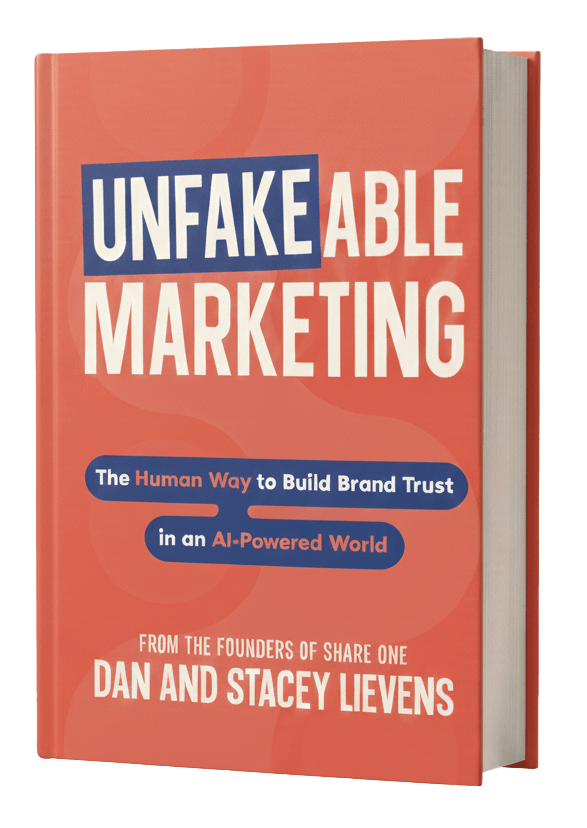
Unfakeable Marketing explains how trust and credibility can be built through real customer experiences instead of traditional promotional claims. The book
Frequently Asked Questions About Unfakeable Marketing
About the Book
What is the book Unfakeable Marketing about?
Unfakeable Marketing explains how trust and credibility can be built through real customer experiences instead of traditional promotional claims. The book focuses on using authentic stories and video testimonials as a core marketing strategy. It presents a structured approach to turning real results into reliable social proof.
What problem does Unfakeable Marketing aim to solve?
The book addresses the growing distrust buyers have toward polished marketing messages and exaggerated claims. It shows how businesses can replace generic messaging with verifiable customer experiences. The goal is to help companies communicate value in a way that feels honest and believable.
What does the term “Unfakeable Marketing” mean in the context of the book?
“Unfakable Marketing” refers to marketing built on real, documented customer outcomes rather than scripted promotional content. It focuses on proof that cannot easily be fabricated because it comes directly from actual users. The concept centers on authenticity, transparency, and credible evidence.
What makes Unfakeable Marketing relevant for modern digital businesses?
Digital buyers often research extensively before making decisions and expect proof before trusting a brand. The book shows how authentic customer stories and video testimonials support this research process. It aligns marketing with how people evaluate products today.
Who the Book Is For (and Not For)
Who is the ideal reader for Unfakeable Marketing?
The book is written for founders, marketers, SaaS teams, agencies, and consultants who want to build trust through real customer experiences. It is especially useful for businesses that rely on social proof and client outcomes. Teams responsible for growth, conversion, or brand credibility will benefit most.
Is Unfakeable Marketing useful for SaaS and subscription businesses?
Yes, the book focuses heavily on ongoing customer relationships and recurring trust signals. SaaS teams can use testimonial-driven strategies to demonstrate value and reduce buyer hesitation. The concepts fit well with long sales cycles and product-led growth models.
Who might not benefit from reading Unfakeable Marketing?
Readers looking for aggressive persuasion tactics or purely promotional copywriting techniques may find it less relevant. The book does not focus on quick hacks or manipulative marketing methods. Businesses unwilling to collect and use authentic customer feedback may also struggle to apply the ideas.
Is Unfakeable Marketing suitable for beginners with limited marketing experience?
Yes, the explanations are practical and structured in a way that does not require advanced marketing knowledge. The book focuses on clear concepts grounded in real customer experiences. Beginners can understand how trust-driven marketing works without complex theory.
Content & Approach
What topics does Unfakeable Marketing primarily focus on?
The book centers on trust-building, customer storytelling, video testimonials, and social proof systems. It explains how to capture genuine customer outcomes and use them in marketing. The focus is on long-term credibility rather than short-term promotional tactics.
Does Unfakeable Marketing teach traditional advertising or persuasion frameworks?
No, the book moves away from traditional advertising methods that rely on claims and slogans. Instead, it emphasizes evidence-based marketing grounded in real customer experiences. The approach prioritizes authenticity over persuasive language tricks.
How does Unfakeable Marketing differ from typical marketing books?
Many marketing books focus on messaging strategies or growth hacks. This book emphasizes proof, customer voices, and transparent storytelling as the foundation of marketing. It presents marketing as a system built around documented outcomes rather than brand claims.
Does the book provide a structured process for using testimonials?
Yes, the book outlines methods for capturing, organizing, and presenting customer stories in a consistent way. It explains how businesses can collect authentic feedback and turn it into credible marketing assets. The emphasis is on repeatable systems rather than one-time testimonials.
Practical Value
What practical skills can readers expect to learn from Unfakeable Marketing?
Readers learn how to gather authentic customer stories, structure testimonial content, and present proof that supports buying decisions. The book explains how to build a library of social proof that grows over time. It also shows how to integrate trust signals across marketing channels.
How can businesses apply the concepts from Unfakeable Marketing immediately?
Businesses can start by collecting real customer experiences and documenting outcomes. The book encourages building a structured process for capturing testimonials consistently. These stories can then be integrated into sales pages, product messaging, and onboarding experiences.
What changes after applying the ideas from Unfakeable Marketing?
Marketing shifts from claim-based messaging to evidence-based communication. Buyers receive clearer proof of results through real customer voices. This can lead to stronger trust signals and more informed purchase decisions.
Does the book help improve conversion and buyer confidence?
Yes, the focus on authentic testimonials helps address skepticism and build credibility during the decision process. When buyers see real experiences instead of marketing claims, they can evaluate offers more confidently. The book explains how structured proof supports conversion without exaggeration.
Relationship to Share One
What is the connection between Unfakeable Marketing and Share One?
The book is connected to Share One’s approach to capturing and presenting authentic customer stories. It reflects the organization’s philosophy around trust, video testimonials, and social proof. The ideas align with systems developed within the Share One ecosystem.
Is Unfakeable Marketing a sales pitch for Share One’s products or services?
The book presents concepts and frameworks focused on trust-based marketing rather than promotional messaging. While it reflects Share One’s perspective, it is primarily educational in nature. Readers can apply the principles regardless of the tools they use.
Can the ideas in Unfakeable Marketing be applied without using Share One?
Yes, the core strategies focus on capturing real customer experiences and building credible proof. Businesses can implement the concepts using their own tools and processes. The emphasis is on methodology rather than specific software.
Does the book help improve conversion and buyer confidence?
Yes, the focus on authentic testimonials helps address skepticism and build credibility during the decision process. When buyers see real experiences instead of marketing claims, they can evaluate offers more confidently. The book explains how structured proof supports conversion without exaggeration.
Format & Usage
How should readers approach reading Unfakeable Marketing?
The book can be read from start to finish to understand the overall philosophy and framework. It is also suitable for revisiting specific sections when building testimonial systems or refining marketing strategy. Readers can treat it as both a guide and a reference.
Is Unfakeable Marketing more of a conceptual book or a practical guide?
The book combines clear concepts with practical frameworks for implementation. It explains why authentic marketing works and how to apply it in real business situations. The focus remains grounded in actionable ideas.
Can Unfakeable Marketing be used as a team training resource?
Yes, marketing and growth teams can use the book to align around a trust-based approach. It provides shared language and structured processes for capturing customer stories. Teams can use it to guide discussions around credibility and social proof.
Does the book support ongoing reference after the first read?
Yes, many sections can be revisited when building testimonial workflows or refining marketing assets. The structured approach allows readers to return to specific concepts when implementing new campaigns. It works as a practical reference for long-term use.