Video testimonials that convert: a practical 60–90s playbook to capture real customer stories, structure prompts, & place clips to boost trust, SEO, &
Video Testimonials:
The Complete Playbook (Collect → Deploy → Convert)
What if a 60–90 second customer story could do what your busiest sales rep can’t, build instant trust, answer objections, and nudge more people to book a call? Video testimonials regularly lift conversion rates because prospects can see and hear real outcomes, not just skim a star rating, and that same on-page engagement can quietly help your SEO by increasing dwell time and relevance signals. If you’re juggling a crowded market (hello, healthcare/finance/real estate), a credibility gap, and a calendar that’s already on fire, you’re about to get a practical playbook, plus a few real-world “this worked” moments, to collect, structure, and deploy video testimonials without turning it into a time-sucking production.
Key Takeaways
Video testimonials build faster trust than written reviews by showing real emotion, specificity, and an unmistakable “someone like me” identity match.
High-converting video testimonials follow a simple story arc: problem, process, and outcome; with concrete details (timeline, stakes, numbers) instead of vague praise.
Keep video testimonials authentic, not over-produced: prioritize clear audio, guided interview prompts, and light editing that preserves the client’s natural voice.
Collect video testimonials without “begging” by asking right after a clear win, milestone, renewal, or referral moment and setting a 10–15 minute, fully guided time box.
Deploy video testimonials where uncertainty is highest: near landing page CTAs, in retargeting ads, post-call follow-ups, and proposals using shorter clips for ads and 45–90 seconds for decision pages.
Support SEO and performance by adding captions and transcripts for indexable text, and implement videos in ways that protect page speed (e.g., lazy-loading embeds or using a widget/hosted hub).
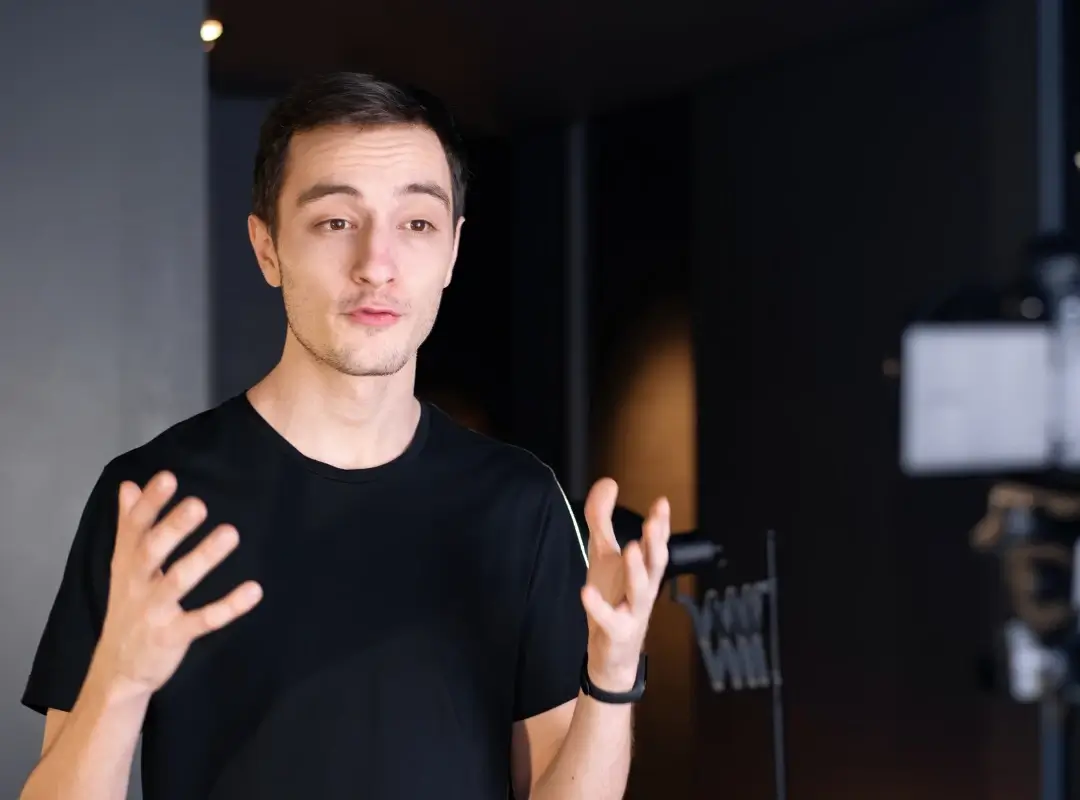
What Are Video Testimonials?
A video testimonial is a short customer story, recorded on camera, where someone explains the problem they had, why they chose you, what the experience was like, and what changed afterward. Think of it as a mini case study with a heartbeat.
If you want a deeper definition plus examples you can model, Share One breaks it down in this guide on what a video testimonial is (worth bookmarking).
Video testimonials vs written reviews
Written reviews are like a snapshot. Video testimonials are like stepping into the scene.
Here’s why video testimonials vs written reviews are better, especially for service businesses where trust is the product:
Emotion travels. A client’s voice cracking a little when they say, “I finally slept through the night”… you can’t fake that with text.
Specificity is easier to believe. When someone says, “We closed 3 deals in 30 days,” you can read their confidence.
Identity match happens fast. Prospects subconsciously ask, “Are they like me?” Video answers in milliseconds.
When written reviews still win:
When the decision is low-risk and fast (think: quick local service).
When a prospect is comparing lots of options and wants skimmable volume.
When you need platform trust (Google Business Profile, Zillow, Healthgrades, etc.).
A practical blend I like: let written reviews handle breadth, and use video testimonials for depth, the “proof stack” that seals the deal.
What makes a testimonial believable
Believability isn’t about fancy lighting. It’s about details that feel lived-in.
A believable testimonial usually has:
Specificity: names the real pain (“I was hemorrhaging time on paperwork…”) and the real context (industry, timeline, constraints).
Story: a before-and-after arc you can follow without squinting.
Results: tangible outcomes, numbers, time saved, stress reduced, fewer headaches.
Red flags that quietly kill trust:
Over-polished “ad voice.” If it sounds like a commercial, your brain labels it “marketing” and tunes out.
Vague praise (“They’re amazing.”) with no proof trail.
No face, no name, no role, anonymous testimonials feel like a cardboard cutout.
I’ve watched this play out with a financial advisor who tried to DIY a testimonial by sending clients a script. Every video came back stiff, like a middle-school presentation. The moment we switched to a guided interview with prompts, the same clients sounded relaxed and real… and suddenly the videos were usable.
Why Video Testimonials Convert
Video testimonials convert because they do something your homepage copy struggles to do on its own: they lend credibility you can’t claim for yourself.
And yes, there’s data behind the “it just works” feeling. Video tends to increase engagement and time-on-page (both helpful behavioral signals), which is why SEO folks pay attention to it.
Trust transfer + objection removal
“Trust transfer” is the handoff moment: your prospect borrows confidence from someone who already took the risk.
In service businesses, prospects usually have one of a few objections on loop:
Will this work for someone like me?
Is this safe / compliant / reputable?
Will I regret spending the money?
Is this going to be a hassle?
A good video testimonial answers those without arguing.
Example: in real estate, a client saying, “We were terrified of overpaying, our agent walked us through comps and we negotiated $18,000 off,” removes fear faster than any bullet list.
If you want to go deeper on mapping testimonials to the sales journey, this breakdown of video testimonials for sales teams is a solid companion.
Why some video testimonials don’t convert (and what fixes it)
Most “non-converting” testimonial videos fail for three boring reasons (which is great news, boring is fixable):
They’re too polished.
Fix: keep it clean, not cinematic. Prioritize crisp audio and authentic delivery.
They’re too vague.
Fix: coach for specifics: timeline, stakes, measurable change.
They’re in the wrong place.
Fix: match the clip to the moment. A 15-second hook works in ads: a 60–90 second story works on a decision page.
One quick gut-check: if a testimonial doesn’t answer, “What was the problem and what changed?” it’s probably a feel-good clip, not a conversion asset.
How to Get Video Testimonials (Without Begging)
You don’t need to “ask for a favor.” You need to document a win.
The mindset shift: you’re not collecting compliments, you’re capturing proof that helps future clients make a safer decision.
Timing triggers (post-win, milestone, renewal)
Timing beats incentives. Every time.
Best moments to ask:
Right after a clear win (a claim resolved, a house closed, a big financial milestone hit).
At a milestone (30/60/90 days of progress, first measurable result).
At renewal or referral moments (when they’re already signaling trust).
A sensory detail that’s weirdly real: if you ask right after a win, clients sound different. There’s energy in their voice. They sit up straighter. The story is still warm.
How to ask
Keep it simple and specific:
Tell them why them (“You asked smart questions and did the work, your story will help people like you.”)
Set a tiny time box (10–15 minutes).
Promise guidance (they won’t have to perform).
If you want a plug-and-play ask plus follow-up reminders, start with a structured approach like the one inside Share One’s video testimonial framework.
Remote vs in-person recording
Remote recording wins for speed and scale. In-person can win for atmosphere.
Remote: faster scheduling, wider reach, easy updates when you need fresh stories.
In-person: richer environment shots (office, home, storefront), sometimes deeper emotion.
Most teams I talk to end up going remote-first and doing a few in-person “hero stories” per year.
If you’re debating formats, here’s the fuller breakdown on video testimonial structure and capture.
Video Testimonial Structure That Works

A converting testimonial isn’t a ramble. It’s a guided story with a beginning, middle, and satisfying end, like the difference between a messy voicemail and a Netflix mini-episode.
The proven framework
The simplest structure that keeps people watching:
Problem (what was broken)
Process (what it was like working with you)
Outcome (what changed, specifically)
It keeps the client honest, keeps the story moving, and keeps your editor from crying.
If you want the step-by-step beats and variations, use Share One’s deeper guide to a video testimonial framework that converts.
Questions that pull real stories
The secret isn’t “better cameras.” It’s better testimonial questions and prompts.
When you ask, “Can you say something nice about us?” you get fluff.
When you ask a question that forces memory, a moment, a detail, a turning point, you get story.
A helpful reference if your interviews keep going sideways is this guide on building a full-funnel testimonial placement strategy so you’re collecting the right stories for the right stages.
5 must-ask prompts
What was broken before you found us?
What changed after you started working with us?
What surprised you (in a good way)?
What result mattered most, numbers, time, peace of mind?
Who is this for (and who is it not for)?
Script Basics
You want guardrails, not a script.
A “scripted” testimonial often sounds like someone reading cue cards in a hostage video (you’ve seen it… painful). Instead, aim for:
A one-sentence setup you provide (industry + outcome)
Prompt-based answers they say in their own words
A light edit that removes detours but keeps the human texture
If you’re building an outbound or referral engine, it’s worth studying how testimonial clips support offers and follow-ups in this video testimonial sales playbook.
Short vs long
Most businesses overestimate attention span.
A strong rule of thumb:
15–30 seconds: ads, retargeting, social proof “hits”
45–90 seconds: landing pages, service pages, “book a consult” pages
90–120 seconds (max): complex or high-trust decisions (healthcare plans, wealth management, high-end real estate)
2 minutes or less is the sweet spot for testimonials, long enough to feel real, short enough to finish.
The trick is front-loading the best moment. Put the “I was skeptical…” or “We got results in 6 weeks…” line early. Let curiosity pull them through.
Where to Use Video Testimonials (Highest Lift Placements)
Placement is where conversion happens. Same video, different spot, totally different results. So, the question is, where to use video testimonials for maximum impact?
Landing pages
For video testimonials on landing pages, your goal is to reduce anxiety right before the click.
Place one high-specificity testimonial near your primary CTA.
Use a second one lower on the page for the “scroll skeptics.”
If you’re in a regulated space, keep claims clean and context-rich.
For extra SEO lift, combine the video with a short text summary and transcript (more on that below).
Paid ads + retargeting
Ads are a thumb war. You’re competing with lunch plans, doomscrolling, and someone’s dog video.
Here’s what works for video testimonials for paid advertising:
Open with the outcome in the first 2 seconds.
Use captions (most people watch muted at first).
Retarget with objection-specific clips (price, time, complexity, trust).
Sales enablement
This is where video testimonials become your quiet closer.
Practical uses:
Send a 45–90 second clip after the first call: “Here’s a client who had the same concern.”
Build a small “proof library” by industry (healthcare, finance, real estate).
Add one testimonial to proposals, right next to the scope and price.
Email marketing
Email is personal… when it doesn’t feel like a newsletter landfill.
In nurture sequences, use short clips that create belief.
In close sequences, use specific results and “here’s what it was like” stories.
Subject line idea that’s not cringe: “Quick story from a client like you”
Placement Map: Use case → Placement → Best length → Metric
Use case
Placement
Best length
Metric to watch
First impression
Home / hero section
30–60s
CTR to key page
Lead capture
Landing page near CTA
45–90s
CVR (form / booking)
Re-engage
Retargeting ads
15–30s
CTR + view-through
Sales acceleration
Post-call follow-up
45–90s
Reply rate / meeting set
Deal close
Proposal / pricing page
60–120s
Close rate
Long-term trust
Email nurture
30–60s
Click-to-call / click-to-book
Implementation Basics (Don’t Slow Your Site)
If your page loads like it’s dragging a couch up the stairs, conversions drop. Video can help you sell, but it can also hurt performance if you slap it on the page carelessly.
For technical SEO fundamentals and performance guidance, Google’s own docs at Google Search Central are the most trustworthy starting point.
Embed vs widget vs hosted page
Quick practical guidance:
Embed on website (native player): simple, but can slow pages if not lazy-loaded.
Widget: often easiest for managing multiple videos and rotating proof.
Hosted page: great for sharing a “proof hub” in sales and email without weighing down your core pages.
If you’re exploring vendors, this is where “video testimonial tools” split into two camps: software you manage vs. services that handle the whole production.
Captions + transcription
Captions and transcriptions aren’t just accessibility, they’re conversion support.
People watch muted in waiting rooms, lobbies, and late at night next to a sleeping spouse.
Transcripts add indexable text, which can support SEO and long-tail relevance.
Bonus: transcripts make it easy to pull punchy quotes for your landing page without rewatching the whole clip.
Compliance + Consent Basics (Trust Killers)
If you’re in healthcare, finance, or any regulated profession, consent and claims aren’t “admin.” They’re your trust foundation.
A great testimonial with sloppy consent is like a beautiful house with a cracked foundation, expensive headaches down the road.
Consent workflow overview
At minimum your consent workflow should have:
Written permission to use the person’s name/likeness/voice
Clear description of where the video will appear (site, ads, email, social)
Secure storage of release forms and original footage
If you work with financial clients, you’ll also want to align with your firm’s review policies. Share One has a niche guide on video testimonials for financial advisors that’s built with those realities in mind.
Ethics note
Not legal advice, just a practical ethics line I recommend you hold.
Don’t over-edit meaning.
Don’t imply “typical results” if it’s a standout outlier.
Don’t pressure clients who feel uncomfortable on camera.
The goal is to celebrate the client’s win, not manufacture a claim.
Measuring Impact (So You Don’t Guess)

If you can’t measure it, video becomes “that nice branding thing” that gets cut when budgets tighten.
You’re better than that. Measure like you mean it.
Metrics that matter
For tracking your metrics. you should start with a simple baseline test:
Page A: no video
Page B: video testimonial + transcript + same offer
Then track:
CTR (are more people moving deeper?)
CVR (are more people booking/applying?)
Assisted conversions (did video touch the journey before the close?)
If you want a deeper discussion on whether the spend pays off, this breakdown on whether video testimonials are worth the investment helps you sanity-check ROI expectations.
ROI measurement
Video testimonial ROI measurement depends on your funnel:
Short-cycle services: watch CVR lift and cost-per-lead changes.
Longer-cycle services (wealth management, high-end real estate): watch sales velocity and close rate.
Attribution tip: don’t demand that video gets “last click” credit. Testimonials often work like a good referral, quietly, over multiple touches.
Video Testimonial Examples (What Good Looks Like)
When you’re reviewing videos, look for “real life” signals: natural pauses, specific details, and a clear sequence of events. Here are what good video testimonial examples look like:
5 good patterns + 5 bad patterns (brief version only)
Good patterns
A clear before/after with one measurable result
A specific objection gets answered (“I worried it would take too much time…”)
The client describes the process in plain language
The first 5 seconds contain a compelling outcome
The person feels like your target buyer (industry, role, situation)
Bad patterns
Generic praise with no story (“They’re the best.”)
Anonymous speaker, no context
Over-produced, ad-like delivery
Long wandering monologue with no outcome
Claims that feel too big without specifics (trust drops fast)
Software vs Service vs DIY (Choose Your Path)
You have three routes:
DIY recording (you run the interviews)
Video testimonial software (you collect clips, then you still manage quality)
Done-for-you service (you get curated stories, edited and ready to deploy)
If you’ve been Googling “best video testimonial software 2026” or “video testimonial tools,” this is the decision hiding underneath the listicles.
DIY (who it’s for)
DIY is right if:
You’re time-rich (or at least calendar-flexible).
You have someone who can interview without making it awkward.
You can live with some inconsistency in lighting/audio.
If that’s you, start by copying a proven structure so you don’t collect 12 minutes of unusable rambling.
Done-for-you service (who it’s for)
Done-for-you is right if:
You want speed, consistency, and minimal back-and-forth.
You need interviews that feel human (not scripted) but still hit the conversion beats.
You operate in higher-trust categories where credibility is everything.
This is where Share One’s video testimonial service stands out: trained human interview directors capture authentic stories, then we deliver polished video testimonials without you chasing clients, wrangling files, or learning editing.
If you’ve ever looked up Share One reviews, the theme you’ll notice is the same: “Finally, someone made this easy without making it feel fake.”
Next Steps
If you take one thing with you, let it be this: video testimonials work when they’re specific, story-driven, and placed where buyers feel the most uncertainty, not when they’re shiny or long-winded. Keep them under about two minutes, pull real “before/after” details, and match each clip to an objection you hear every week on sales calls.
Once you’ve got even 3–5 strong videos, you’ll feel it: warmer leads, fewer “let me think about it” stalls, and more prospects who show up already trusting you.
Get started with Share One
When you want the fastest path with the least hassle, real interviews, clean edits, and zero awkward chasing, start here: Share One can help you capture customer stories that sell with heart and hold up under scrutiny.
See case studies
If you’re the “show me the numbers” type, review real outcomes and deployments so you can model what works in your industry before you record your next video. Head on over to Case Studies.
Frequently Asked Questions
What are video testimonials, and why do they work so well?
Video testimonials are short, customer-recorded stories that explain the problem, why they chose you, what the experience was like, and what changed after. They work because prospects can see and hear real emotion and specificity, creating “trust transfer” and answering objections faster than written reviews.
How long should a video testimonial be for the best conversion rate?
For most businesses, 45–90 seconds is the sweet spot for landing pages and “book a call” pages, while 15–30 seconds works best for ads and retargeting. Keep most testimonials under 2 minutes so they feel real, finishable, and easy to watch on mobile.
What makes a video testimonial believable (and what hurts trust)?
Believable video testimonials include specific context (role, timeline, stakes), a clear before-and-after story, and tangible results like numbers, time saved, or stress reduced. Trust drops when videos sound scripted, stay vague (“they’re amazing”), or hide identity (no face, name, or role).
How do you ask for video testimonials without it feeling awkward?
Ask right after a clear win, at a milestone, or during renewal/referral moments when the result feels fresh. Keep the request simple: explain why their story helps people like them, set a 10–15 minute time box, and promise guidance so they don’t feel pressured to “perform.”